One product,
taken all the way down.

The Work page gives every entry the same short structure on purpose: problem, approach, outcome, and nothing more. This page is the opposite move: full depth on the entries worth writing at length, with the real trade-offs and (once they exist) the real artifacts behind each one. Four so far, and it grows as more are worth writing.

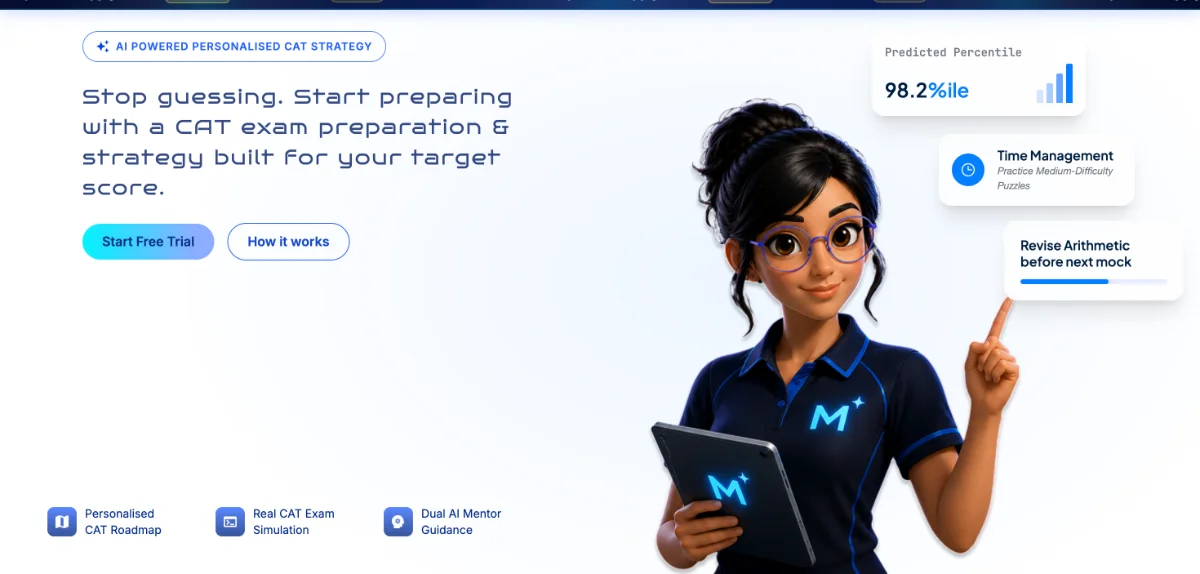
ScoreVedaa product landing page: an AI-powered CAT exam preparation and strategy platform with a predicted-percentile tracker and adaptive practice recommendations

ScoreVedaa · product landing page

Deep dive 01 Live

ScoreVedaa

NeuraMach.AIAI Product ManagerMar 2026 – Present

One of two AI products I'm actively building inside NeuraMach.AI's studio.

Problem

CAT exam prep is generic: every student gets the same mock test and the same syllabus order, and institutes see the aggregate score, not why a student is actually stuck, so guidance defaults to "practice more."

Approach

Own the product end-to-end: diagnostic assessments, personalized action plans, adaptive practice journeys, and the recommendation logic behind them. Write the PRDs that turn student and coaching-institute pain points into scoring logic and success metrics, set a responsible-AI and data-consent framework for personalized learning, and run B2C and B2B tracks in parallel: one for students, one for institutes who need better insight, not a competing product.

Outcome

In beta-launch planning and iteration, with the feedback loop already running back into the roadmap. No inflated numbers here: that's the honest state of a beta.
Product Strategy PRDs Adaptive Learning Responsible AI Data Consent B2C/B2B Strategy
Artifacts
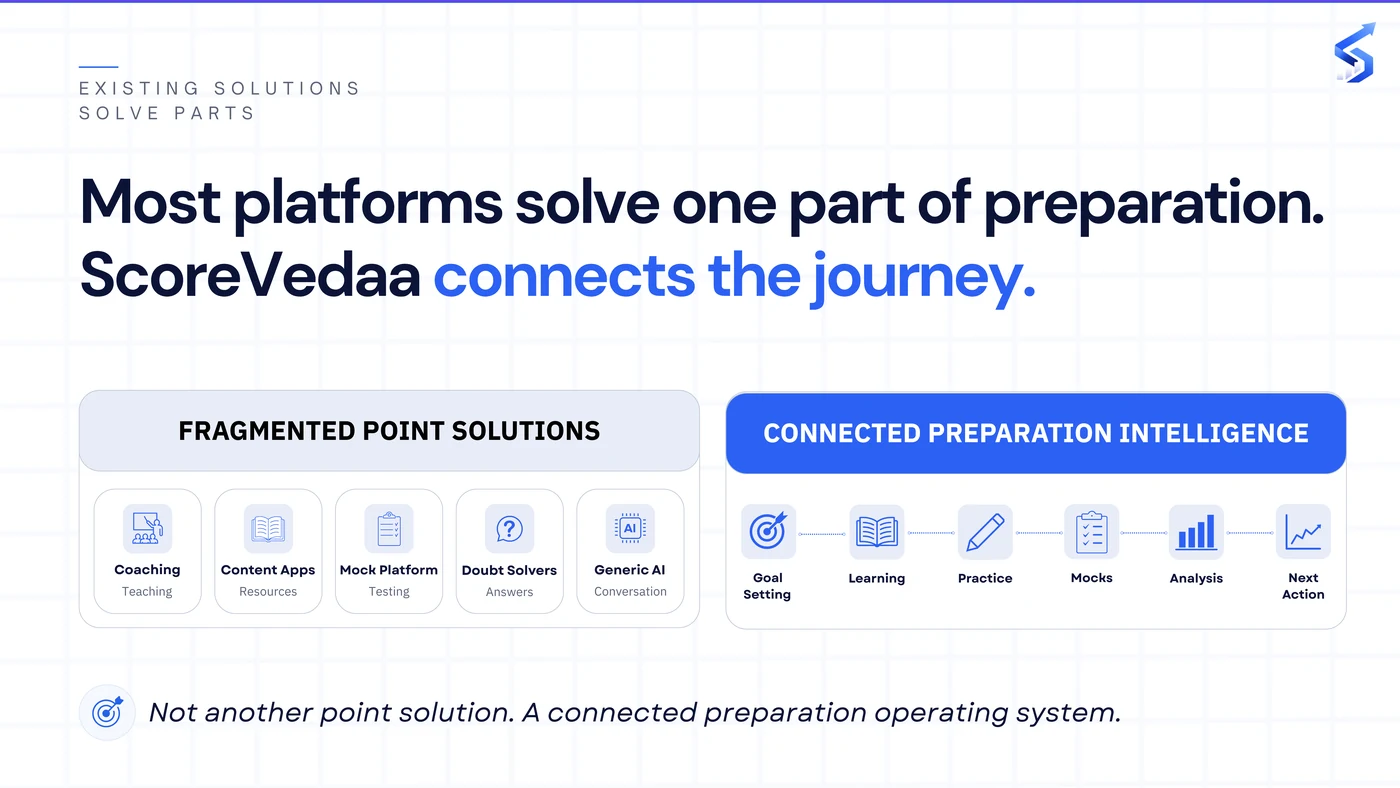
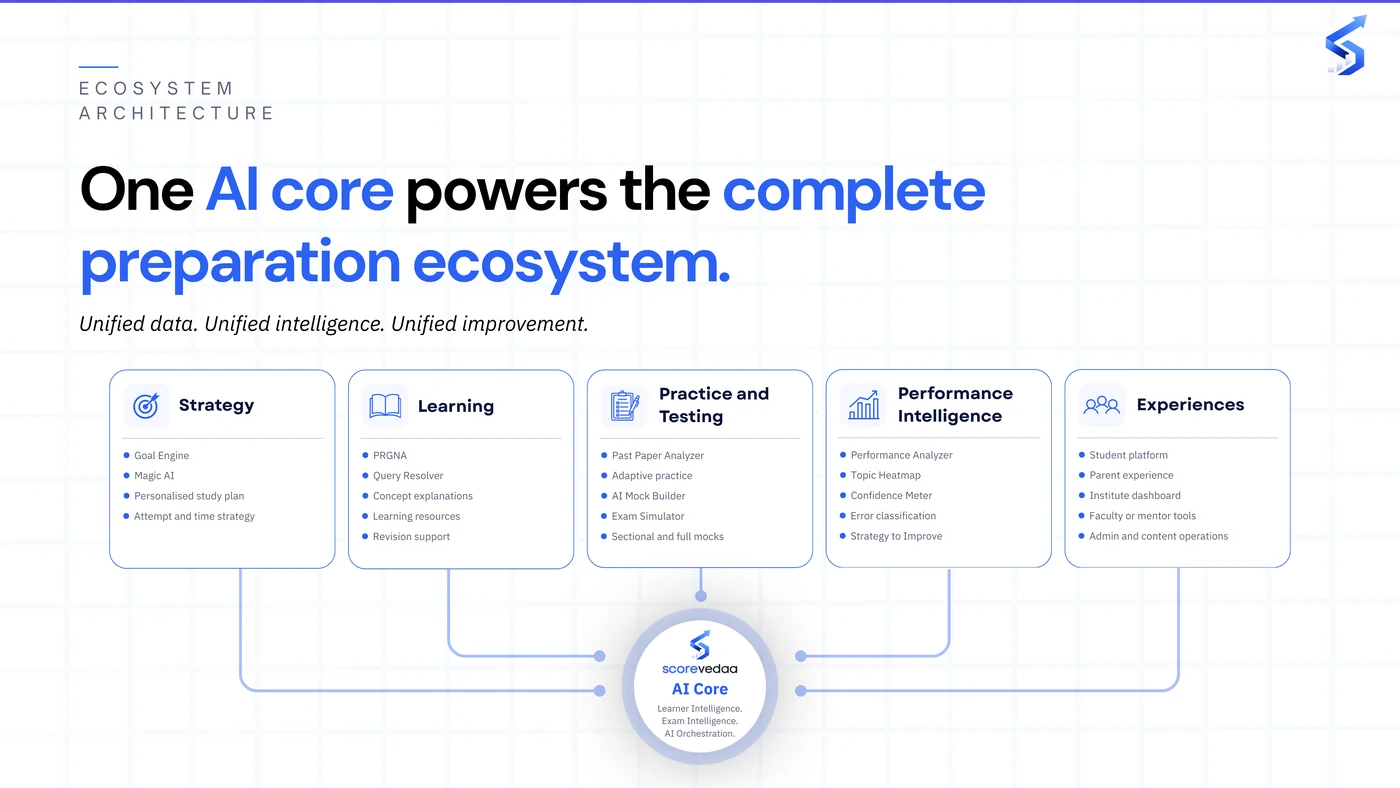
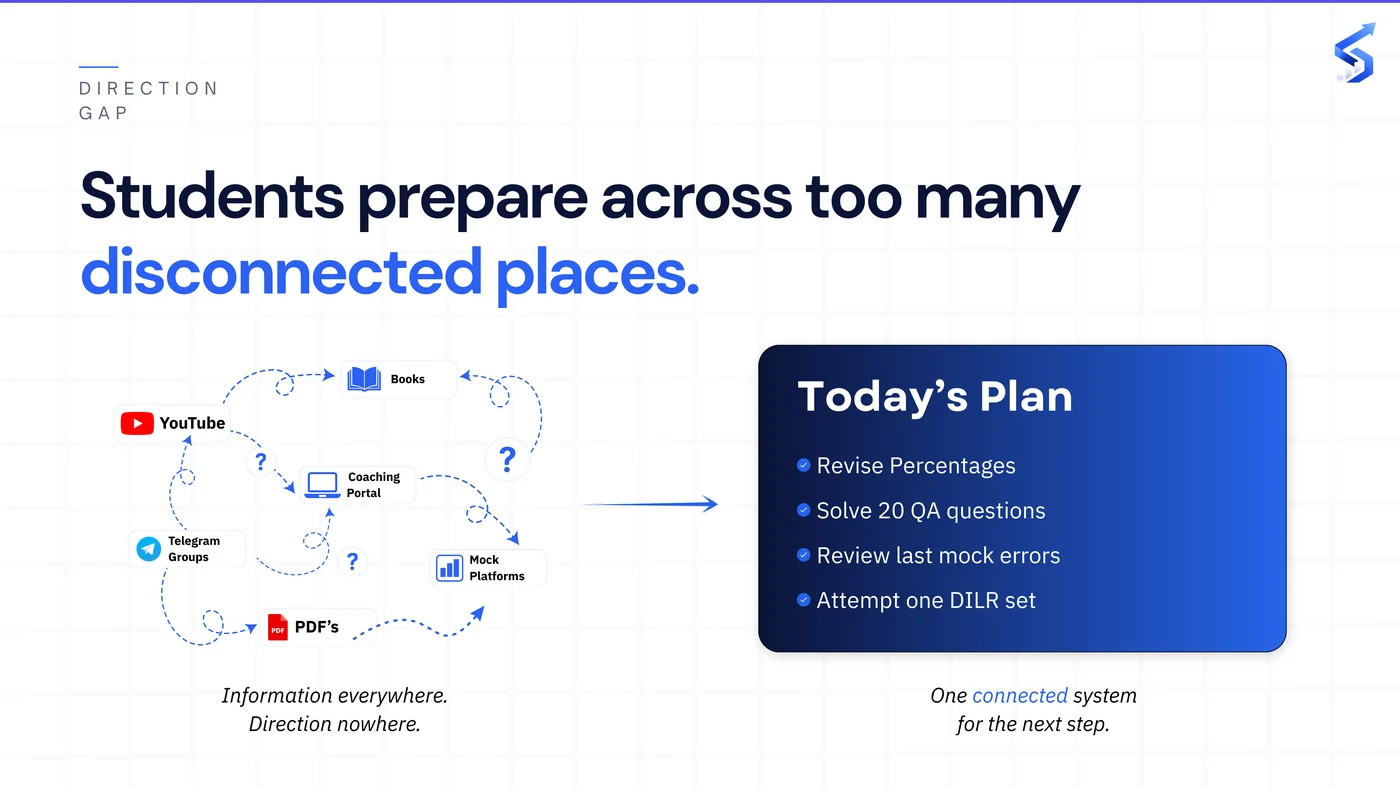
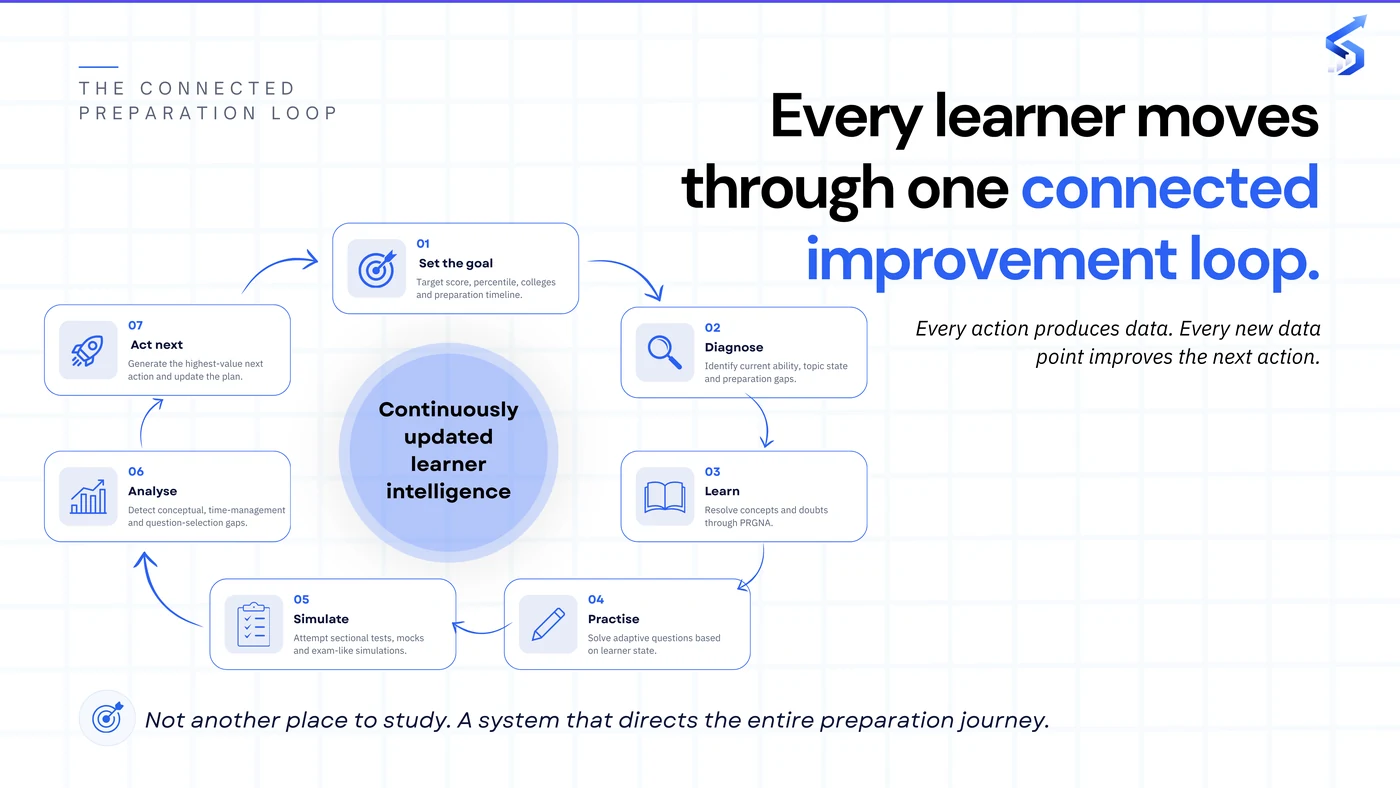
ScoreVedaa PRD slide: 'Direction Gap' — students today prepare across disconnected books, YouTube, coaching portals, and mock platforms with no connected system for the next step ScoreVedaa PRD slide: 'The Connected Preparation Loop' — a seven-step cycle of goal-setting, diagnosis, learning, practice, simulation, analysis, and next action, backed by continuously updated learner intelligence ScoreVedaa PRD slide: 'Existing Solutions Solve Parts' — comparing fragmented point solutions (coaching, content apps, mock platforms, doubt solvers, generic AI) against ScoreVedaa's connected preparation intelligence ScoreVedaa PRD slide: 'Ecosystem Architecture' — one AI core powering five pillars (Strategy, Learning, Practice and Testing, Performance Intelligence, Experiences) through unified data, intelligence, and improvement
Deep dive 02 Wrapped

Startup Mela

General Secretary, E-CellSt. Joseph's UniversityApr 2024 – Feb 2025

Problem

St. Joseph's University's flagship startup ecosystem event needed the same coordination rigor as a product launch: dozens of independent stakeholders, one fixed date, and zero room to slip. Startups, VC firms, and student participants each had different needs and timelines, and none of them reported to each other.

Approach

Owned the full production lifecycle rather than a single workstream, from early planning through day-of execution. Coordinated across three distinct stakeholder groups, closer to multi-sided-marketplace coordination than a typical single-track event, and sequenced decisions correctly: venue, dates, and VC commitments locked early; content and session details left flexible until later.

Outcome

Delivered the full multi-stakeholder rollout on schedule: 65+ startups, 25+ VC firms, and 1,000+ participants, on time. A real-world stress test of program management at a scale most early-career candidates never touch.

Program Ownership Multi-Stakeholder Coordination Deadline-Driven Execution Partnerships
Press coverage
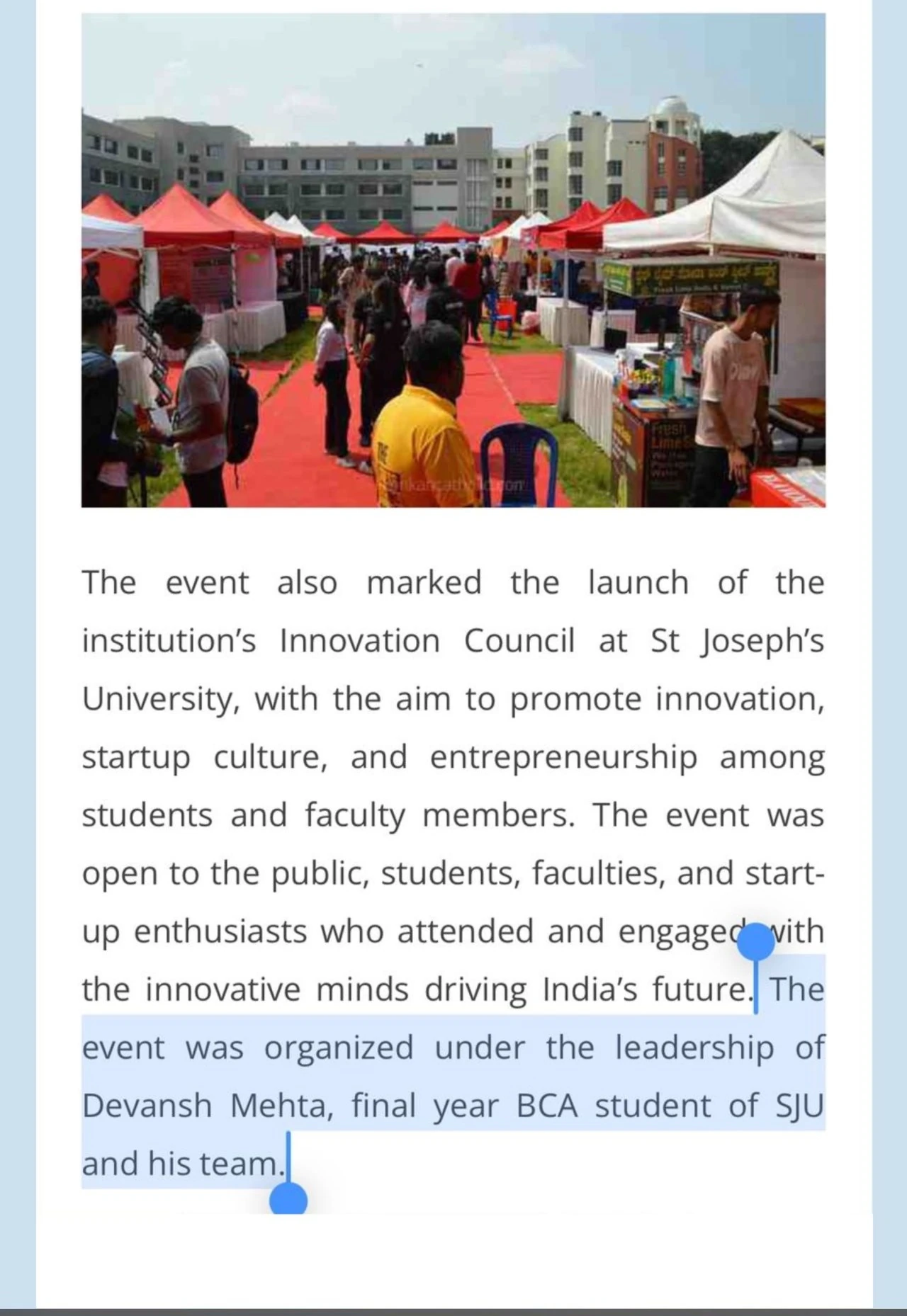
konkancatholic.com coverage of Startup Mela, naming Divyansh Mehta as the student organizer who led the event and his team
konkancatholic.com · read the article ↗
Artifacts
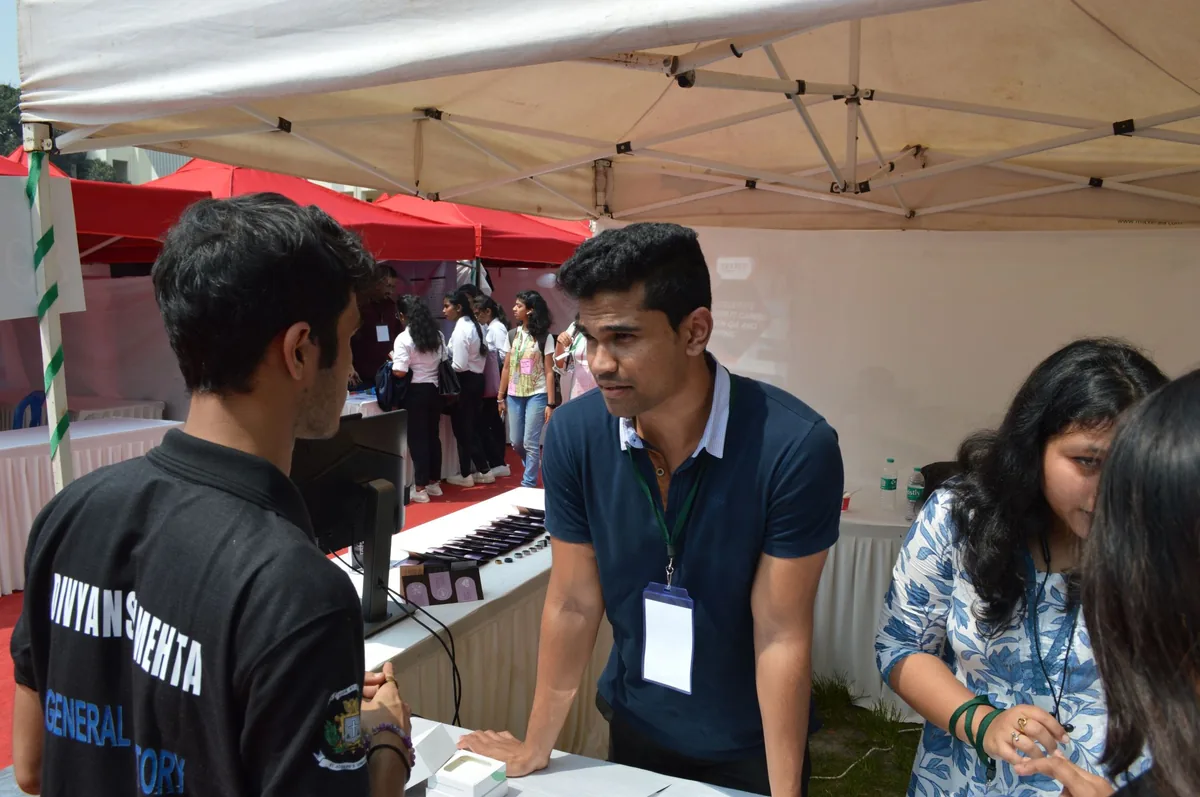
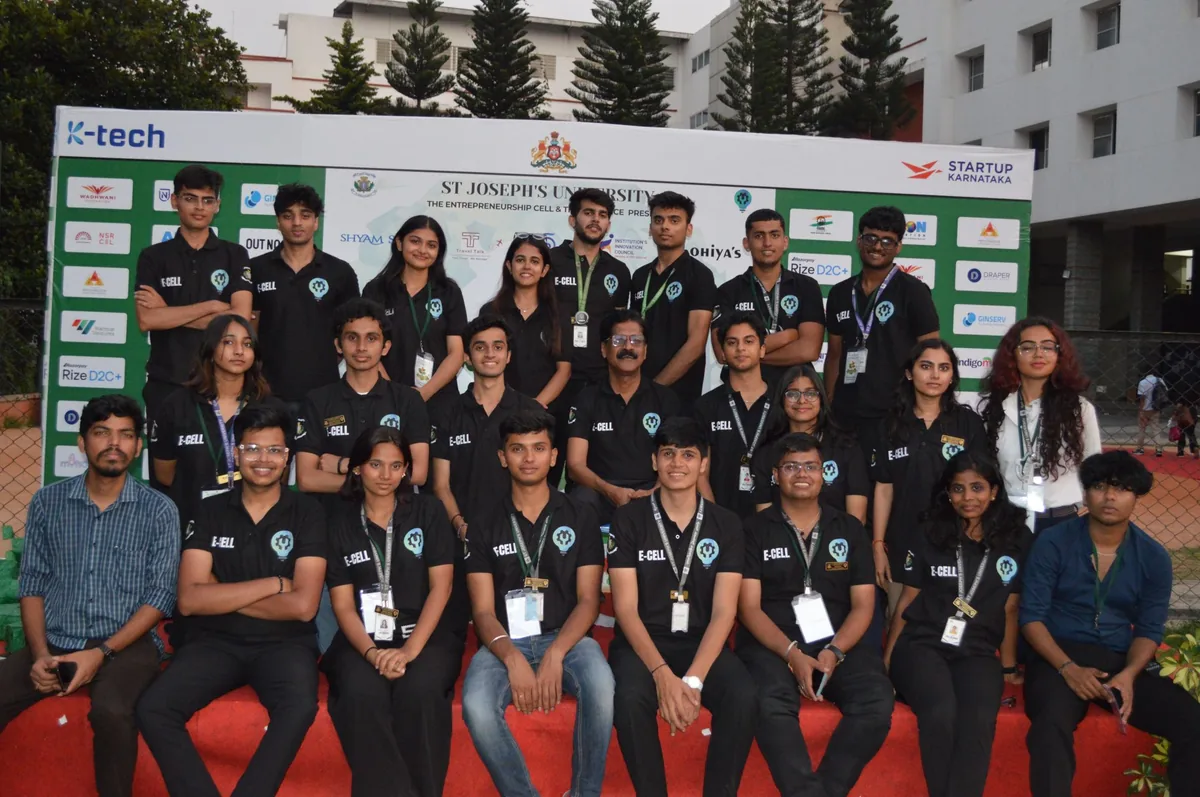
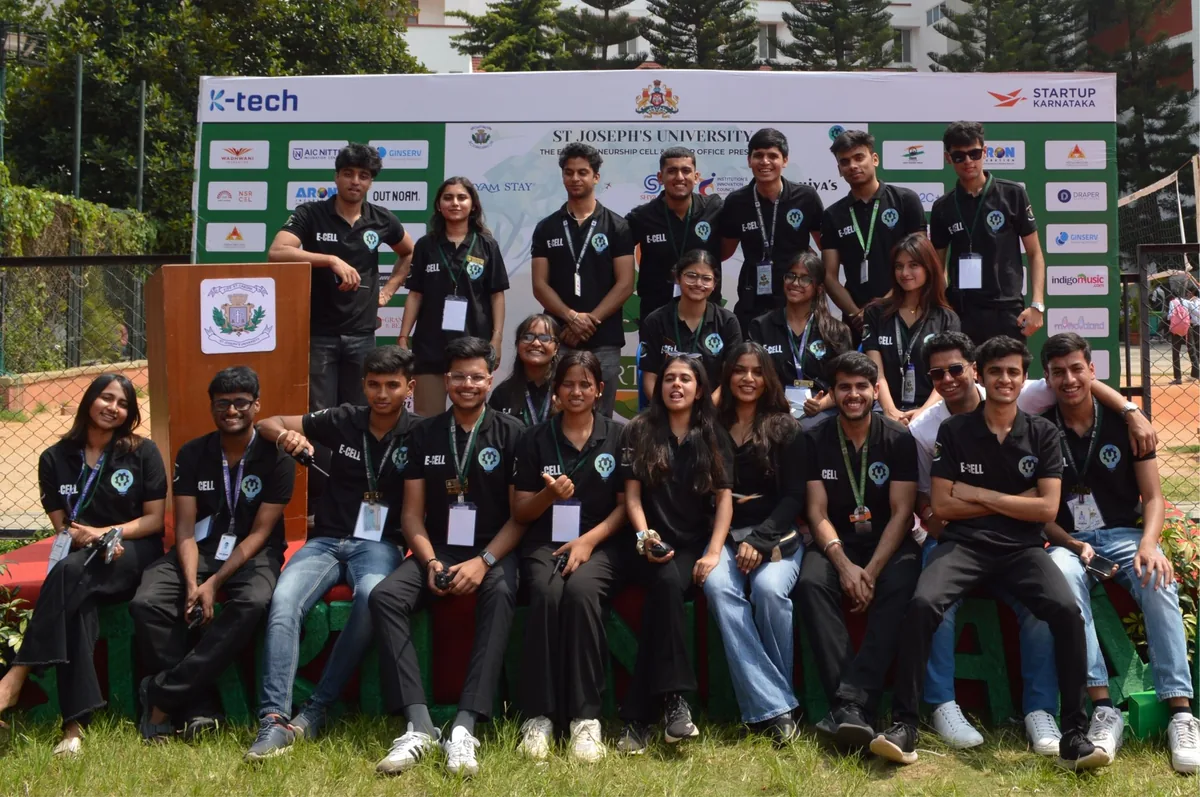
An attendee speaking with a startup representative at an exhibitor booth during Startup Mela The St. Joseph's University E-Cell organizing team on stage at Startup Mela The St. Joseph's University E-Cell organizing team at Startup Mela, second group photo
Deep dive 03 Shipped

VitaMind

UX Design & Full-Stack BuildFreelanceAug 2026

Problem

VitaMind is psychologist Sanaya Mehta's practice in Mukundnagar, Pune: evidence-based psychotherapy, cognitive assessments, CST (Cognitive Stimulation Therapy), memory training, and positive-ageing programs. A solo practitioner in mental healthcare needs a site that reads as clinically credible and calm, not a generic small-business template, since trust is the entire conversion mechanism for someone choosing a therapist.

Approach

Ran discovery into the specific services and tone the practice needed, then owned UX and full-stack build solo, using AI-assisted development (Claude) to compress the build timeline well below the traditional Spectrum build that came before it.

Outcome

Live at vitaminds.in: a site whose calm, credible framing matches what the practice actually offers, not a generic template papered over a mental-health service.

UX Design Full-Stack Build AI-Assisted Dev Client Work
Artifacts
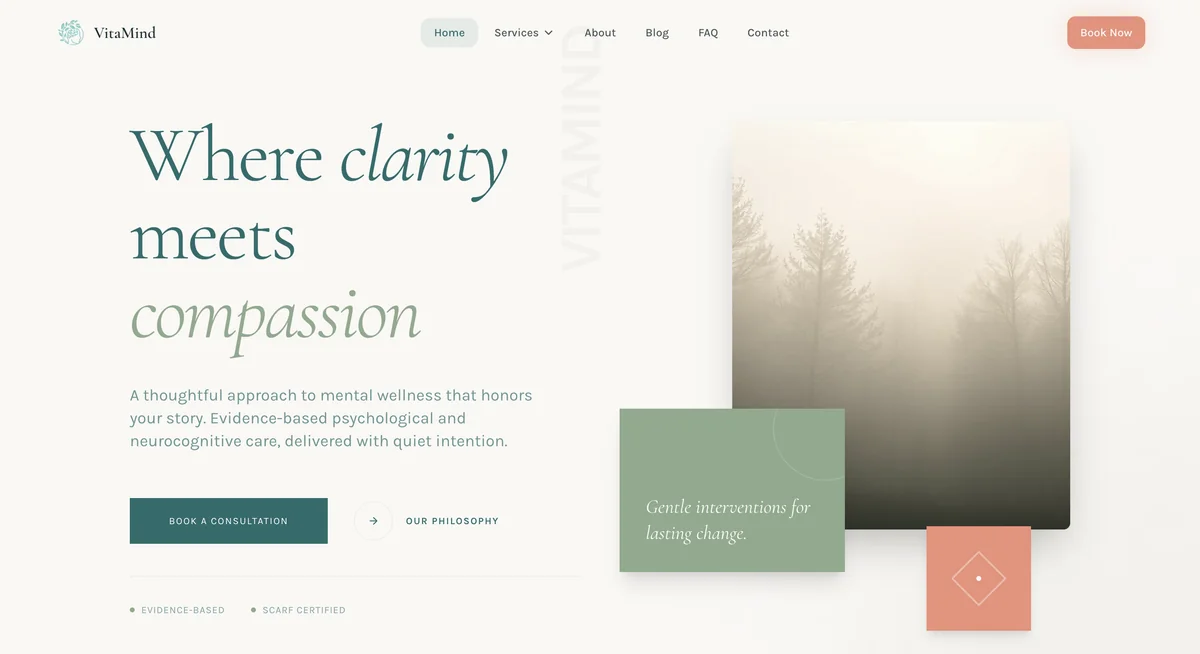
VitaMind homepage: 'Where clarity meets compassion,' a calm, editorial landing page for Sanaya Mehta's psychology practice
Deep dive 04 Building

Approval OS

Personal ProductFounder / Product & Systems DesignAug 2026 – Present

Problem

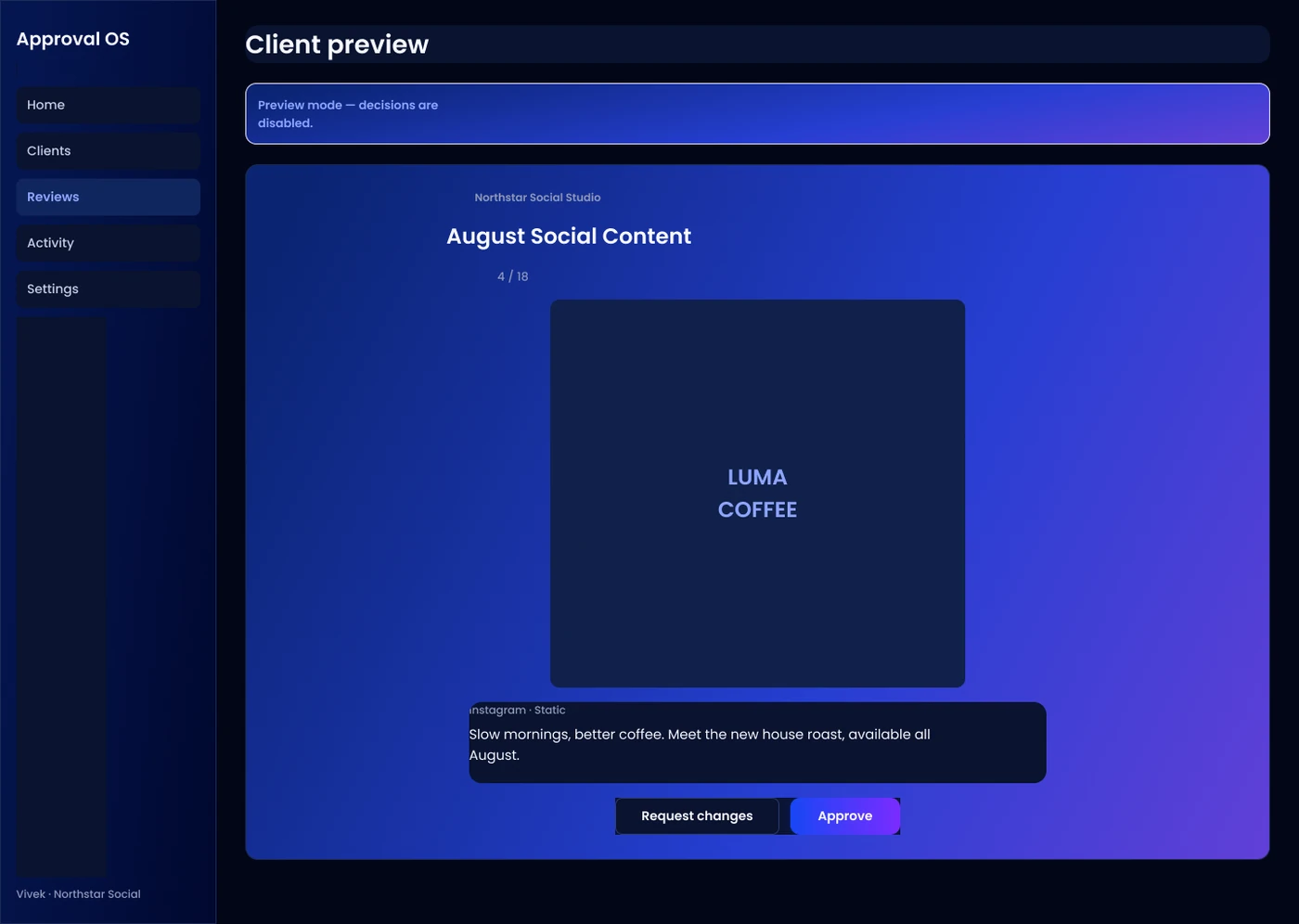
Social media agencies send creative and captions to clients for approval over WhatsApp and email threads — which makes "what exactly did the client approve" a real liability question, not a rhetorical one. A verbal or checkbox approval breaks the moment a caption gets edited after the fact. Clients also won't create an account just to review a post.

Approach

Wrote the product PRD, then a 39-section Technical Requirements Doc translating it into a concrete engineering baseline — stack, data model, security, and a core invariant: approval is never a mutable boolean. Every decision binds to an exact, immutable creative + caption version; editing either after approval doesn't quietly update the record, it invalidates it and requires re-approval. Paired this with a full Design System v2.0 (57 Figma frames across agency desktop, mobile client review, and onboarding) and a 10-day engineering alpha plan sequencing auth → content batching → guest review links → versioning/invalidation → annotations → hardening.

Outcome

Engineering handover baseline complete: PRD, 39-section TRD, and 57-frame design system, ready for build. Guest reviewers need no account — a capability-scoped link is the entire client-side surface. Currently in active development against the 10-day alpha plan.

Product Strategy Technical Spec Writing System Design Design Systems Data Integrity / Versioning
Artifacts
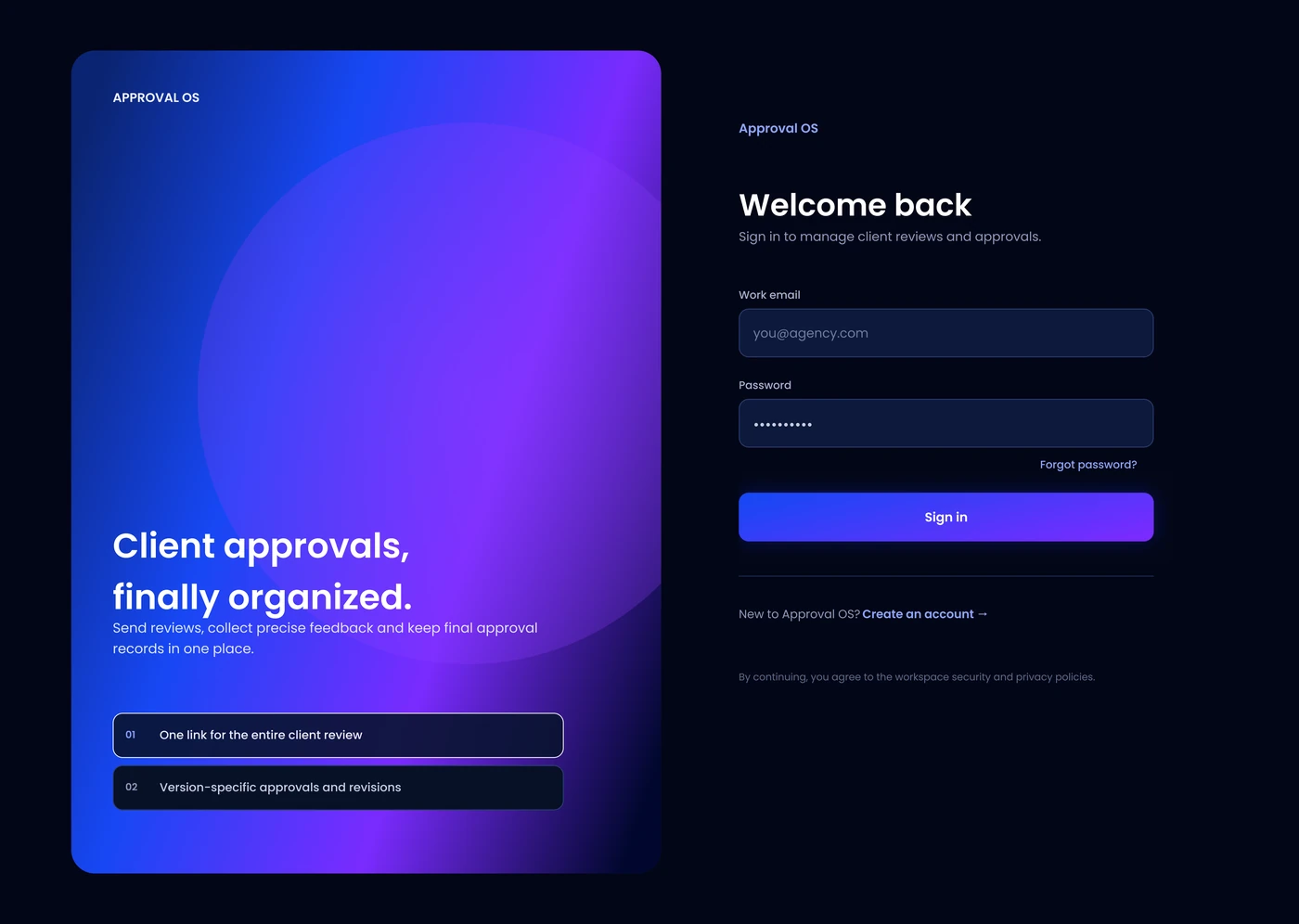
Approval OS sign-in screen from the Design System v2.0: split-screen layout with agency sign-in on the right and product messaging ('Client approvals, finally organized') on the left Approval OS client preview screen from the Design System v2.0: a guest reviewer viewing a versioned Instagram post with Request changes and Approve actions, preview mode banner disabling decisions